Solid Wood Dual-Tier Cat Tree for Climbing & Perching
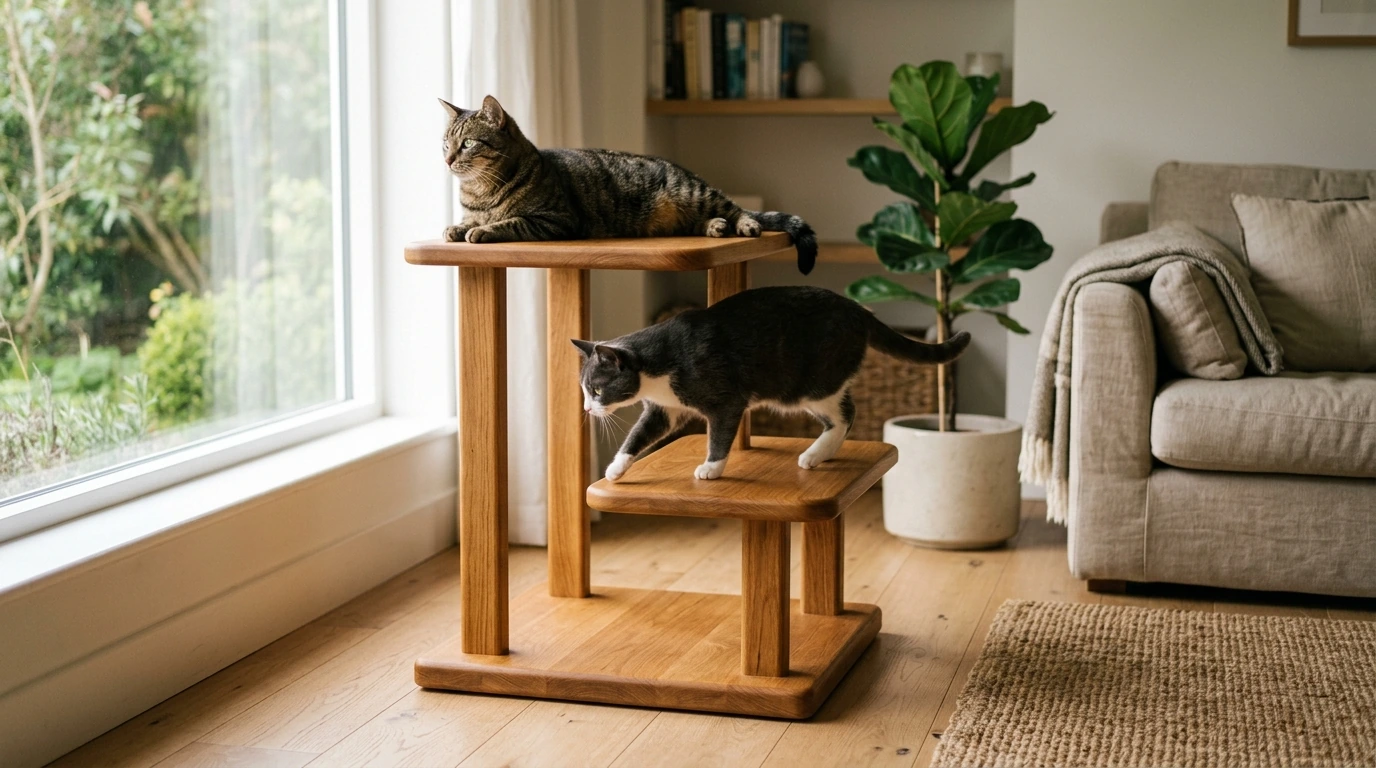
Luxury Solid Wood Cat Tree: Dual-Tier Climbing & Diving Platform for Cats
A furniture-grade climbing structure can do more than keep cats busy—it can shape daily movement, reduce boredom, and create a dedicated “vertical territory” that feels secure. A dual-tier solid wood platform is built for cats that love to climb, perch, and launch into playful jumps, while still fitting into a polished home aesthetic. For homes that don’t want bulky carpeted towers (or the shedding and odors that can come with them), a refined wood platform offers a steadier, cleaner-feeling alternative that still supports the behaviors cats crave.
Veterinary and welfare organizations consistently highlight the value of enrichment, including safe vertical space, to support feline well-being. Helpful references include the American Association of Feline Practitioners (AAFP) Feline Environmental Needs Guidelines and International Cat Care’s advice on creating a cat-friendly home.
What Makes a Dual-Tier Platform Different
Unlike tall, fabric-wrapped “trees” with multiple small ledges, a dual-tier platform focuses on two generous, purposeful zones. This design can be especially satisfying for confident jumpers and cats that like clear routes rather than cluttered ladders.
- Creates two distinct zones: an upper lookout for lounging and a lower tier for stepping, stalking, and takeoff practice.
- Encourages natural behaviors—climbing, surveying, jumping—without relying on floppy fabric towers.
- Works well as a “vertical lane” near a window, hallway corner, or beside sturdy furniture to expand a cat’s route through the room.
- Supports multi-cat dynamics by offering separation of space without requiring a huge footprint.
Solid Wood Construction and the Feel of Real Furniture
Solid wood platforms tend to feel steadier underfoot than lightweight composite builds, particularly when a cat lands with enthusiasm or pivots mid-play. That confidence factor matters: when the landing feels reliable, cats are more likely to use the space daily instead of treating it like an occasional novelty.
- Solid wood often provides a planted, stable feel that supports bold jumping and quick turns.
- A refined wood finish blends into living rooms and offices without looking like a pet accessory.
- Look for smooth edges, consistent sanding, and tight joints to reduce snagging and wobble over time.
- A heavier base generally improves stability during “launch-and-land” play.
Materials and comfort checklist
| Feature to look for | Why it matters for cats | What to verify during setup |
|---|---|---|
| Stable base weight | Reduces tipping during jumps | Press on corners; confirm no rocking |
| Smooth, sealed surfaces | Safer paws and easier cleaning | Run a hand along edges; check for splinters |
| Non-slip contact points | Improves confidence on takeoff/landing | Add pads if floors are slick |
| Rounded corners | Less bump risk in fast play | Ensure corners aren’t sharp or chipped |
Climbing, Perching, and “Diving” Play: How Cats Use It
Cats tend to assign “jobs” to different heights. The upper tier commonly becomes a lookout and calm zone—useful for cats that like to monitor household activity, relax above foot traffic, or settle where they feel in control. The lower tier functions as a practical step that makes the whole setup accessible for a wider range of cats.
- Upper tier supports lookout behavior—many cats choose higher spots when they want calm, distance, and visibility.
- Lower tier acts as a transition step for kittens, seniors, or cautious cats building confidence.
- Placing the unit near a sofa or sturdy bench can create a safe route for “parkour” play without risky, awkward leaps.
- Rotate toys and add a soft throw on one tier to encourage both play and rest in the same footprint.
If a cat tends to “dive” off elevated spots, a dual-tier platform can help shape safer takeoff angles. Pair it with an open landing zone and a traction-friendly surface so the landing feels predictable rather than slippery or cramped.
Sizing and Placement for Real Homes
Placement is the difference between a platform that becomes a daily favorite and one that sits unused. Cats naturally revisit routes that connect to meaningful destinations—windows, family gathering areas, or a quiet corner that feels protected.
Stability and Safety Essentials
Care and Long-Term Maintenance
Product Snapshot
If the goal is a stable, furniture-like piece that supports climbing, perching, and energetic jumping, Luxury Solid Wood Cat Tree: Dual-Tier Climbing & Diving Platform for Cats is designed to deliver that “firm platform” feel while keeping the look clean and elevated.
At-a-glance details
| Item | Details |
|---|---|
| Price | 1243.65 USD |
| Availability | In stock |
| Product page | View product |
More in-stock finds
- Bluetooth MP3 MP4 Player with 4.0″ Touchscreen
- Mini 8GB Voice Recorder Digital Audio MP3 Player USB Pen with Earphones
FAQ
Is a solid wood cat tree better than a carpeted tower?
Solid wood platforms typically feel more stable and are often easier to wipe clean, while carpeted towers can trap fur and odors over time. Many cats also enjoy the firm footing of wood, but scratching needs may require adding a separate scratching post if the unit isn’t built for scratching.
Where should a dual-tier cat platform be placed for the best use?
Place it near a window or a main living area where your cat already likes to hang out, and keep clear landing space around it. On smooth floors like hardwood or tile, a non-slip mat underneath helps prevent sliding and builds confidence for takeoffs and landings.
How can a multi-cat home use one platform without conflicts?
Set it up so cats have more than one route to approach and leave, reducing the chance of one cat blocking the other. It also helps to pair the platform with another perch or bed elsewhere so there’s always an alternative resting spot.



Leave a comment