Forgotten Home Safety Habits: Daily & Weekly Checks
Home Safety Habits Everyone Forgets: Simple Routines & Smart Safety Checks
Most home accidents and break-ins happen because small, repeatable steps get skipped—often the boring ones. A few low-effort habits, done on a schedule, can lower everyday risks from fire, falls, leaks, and opportunistic theft without turning life into a checklist marathon. The goal isn’t perfection; it’s consistency in the handful of places where “quiet risks” tend to build.
The “quiet risk” zones: where small lapses become big problems
Many emergencies start in the same predictable spots. When you know where risk hides, it’s easier to build routines that actually stick.
- Entry points: Unlocked side doors, a garage-to-house door that “usually” latches, or spare keys left under a mat or planter.
- Fire and heat sources: Unattended cooking, space heaters parked too close to fabric, overloaded outlets, and blocked vents.
- Water and gas: Slow leaks under sinks, aging supply hoses, and shutoff valves no one practices using.
- Falls and injuries: Cluttered stairs, loose rugs, dim hallways, and slippery bathrooms.
- Outdoor and garage areas: Tools, ladders, and chemicals that are accessible to kids—or easy to steal.
Authoritative safety guidance is worth keeping handy for reference and check intervals, including the NFPA’s smoke alarm recommendations, the CDC’s home safety resources, and Ready.gov’s emergency planning basics.
Daily habits that take under two minutes
These are “micro-habits”—small enough to do even when you’re tired, but powerful enough to prevent common accidents.
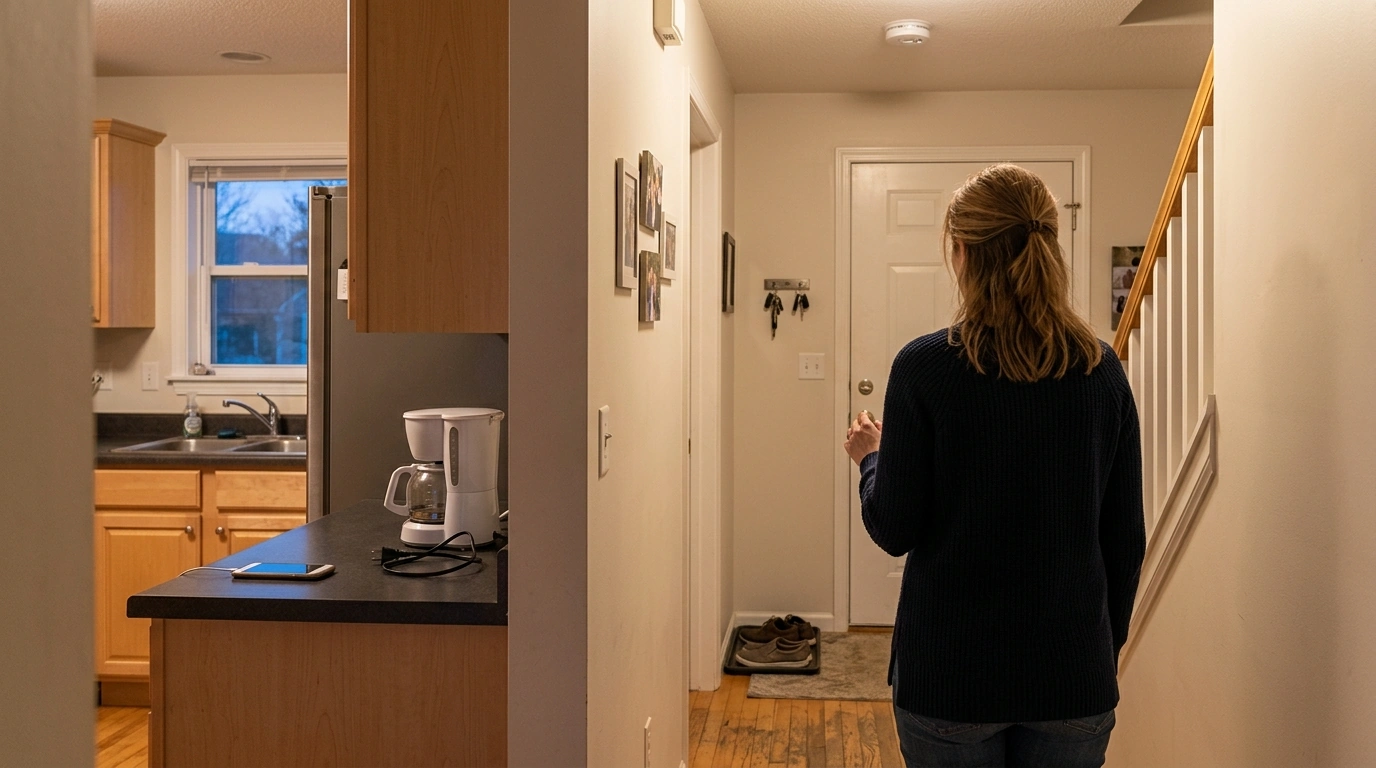
- Door sweep before bed: Check all exterior doors, including the garage-to-house door. Confirm the deadbolt is fully thrown and the latch aligns cleanly (misalignment is a sneaky reason doors don’t actually secure).
- Stove and counter reset: Knobs off, oven off, dish towels away from burners, and small appliances unplugged if they won’t be used again that day.
- Pathway clear: Remove trip hazards from stairs and hallways. Keep one “always clear” route to exits—no boxes, laundry baskets, or pet toys.
- Quick scan for water: Look under the kitchen sink and around toilets for puddles, damp cabinets, or a musty smell that wasn’t there yesterday.
- Device charging hygiene: Charge phones and power banks on hard surfaces away from bedding, curtains, or piles of paper. Avoid daisy-chaining power strips.
Weekly safety checks that prevent common emergencies
A weekly rhythm catches issues before they become expensive repairs (or urgent calls). If you tie checks to routines you already do—trash night, laundry day, grocery day—these become nearly automatic.
Weekly home protection checklist
| Area | What to check | What to do if it fails |
|---|---|---|
| Smoke/CO alarms | Test button works; unit not expired | Replace batteries or unit; note replacement date |
| Electrical | Hot outlets, loose plugs, damaged cords | Unplug/stop use; replace cord; call electrician if outlet warms |
| Laundry | Lint screen/vent clear; hose intact | Clean vent path; replace crushed hose; schedule vent cleaning |
| Entry points | Locks engage smoothly; strike plate secure | Tighten screws; adjust door; upgrade hardware if needed |
| Bathrooms | Non-slip surfaces; fan working; no leaks | Add mat/grips; clean mold; repair leak and dry area |
Monthly and seasonal routines that most households skip
Monthly and seasonal checks are where “I didn’t know that could happen” problems tend to live.
- Practice shutoffs: Locate and label the water main, gas shutoff (if applicable), and electrical panel. Confirm you have the tool needed (some gas shutoffs require a wrench) and that household members know the basics.
- Replace or service filters: HVAC filters, range hood filters, and bathroom fan grills. Dust buildup can raise fire risk and hurts air quality.
- Heater and fireplace season prep: Keep space heaters at least 3 feet from anything combustible. If you use a fireplace, schedule chimney/flue inspection on a regular cadence.
- Storm readiness: Clear gutters and drains, secure outdoor furniture, and verify flashlights/spare batteries still work.
- Medication and chemical storage: Lock or store high; keep items in original containers with readable labels; dispose of expired products safely.
Kid, pet, and guest-proofing: safety for people who don’t know your house
Homes are easiest to navigate for the people who live there. Guests, babysitters, and visiting family don’t have your muscle memory—so remove guesswork.
A simple safety schedule that actually sticks
Recommended items to support your routine
- Home Safety Habits Everyone Forgets – Practical Guide to Everyday Home Protection, Simple Routines & Smart Safety Checks
- Mini 8GB Voice Recorder Digital Audio MP3 Player USB Pen with Earphones (handy for recording maintenance notes, shutoff instructions, or quick “what to do” reminders for house-sitters)
- Bluetooth MP3 MP4 Player with 4.0″ Touchscreen (useful for keeping offline emergency info, household checklists, or a saved “home walkthrough” video)
A ready-to-use checklist for quick home safety resets
FAQ
How often should smoke and carbon monoxide alarms be tested or replaced?
Test alarms monthly, and replace batteries when low (or on a consistent schedule you can remember). Replace the alarm unit based on manufacturer guidance—many are designed for about 10 years—and make sure there’s coverage on every level and near sleeping areas.
What is the fastest way to reduce home fire risk without buying new equipment?
Stay attentive while cooking, keep combustibles away from heat sources, and clean dryer lint/vents routinely. Also avoid overloaded outlets, stop using damaged cords, and keep exits and hallways clear.
What should be checked before leaving home for a weekend trip?
Lock all entry points, confirm the stove/oven is off, unplug higher-risk appliances, and do a quick water scan for active leaks. Ensure alarms are working and consider light timers or pausing mail/package deliveries so the home doesn’t look unattended.







Leave a comment