Best Play Kitchen Age Range: 18 Months to 7 Years
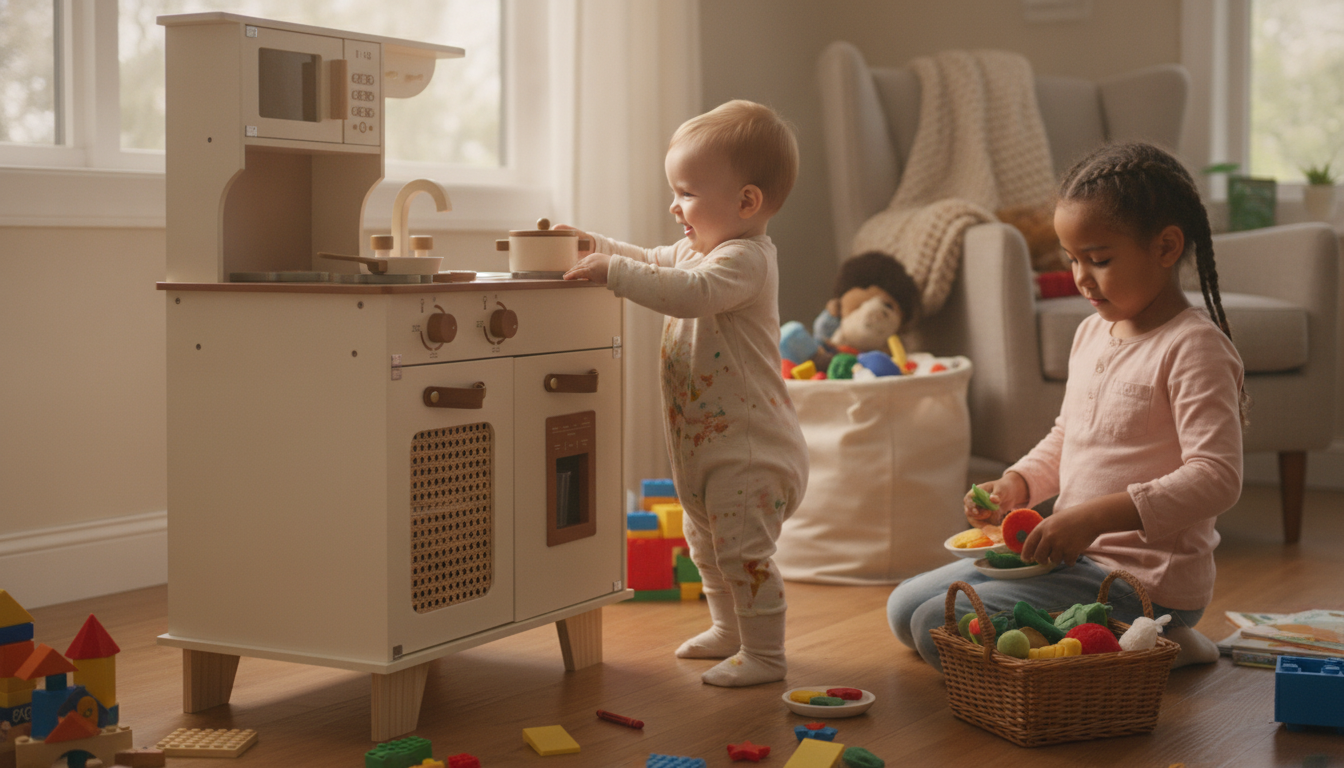
What age group is a play kitchen for?
Most play kitchens are designed for toddlers through early elementary kids—roughly ages 2 to 7. The “best” age depends less on the number on the box and more on how your child plays: pretend-cooking, opening doors, turning knobs, and copying everyday routines. Many families find a play kitchen becomes a daily favorite around age 3, when imaginative play and simple role-play really take off.
Best ages by stage
Ages 18–24 months (with supervision): Some children can enjoy a play kitchen early if the set is simple and sturdy, with larger pieces and minimal small accessories. At this stage, they’ll mainly explore doors, shelves, and basic cause-and-effect features.
Ages 2–4: This is the sweet spot for most play kitchens. Kids practice pretend play (making “soup,” serving caregivers, feeding dolls), build vocabulary, and strengthen fine motor skills by turning knobs, placing pans, and organizing play food.
Ages 5–7: Older preschoolers and early elementary kids often use the kitchen for longer story-based play—running a “restaurant,” taking orders, or cooking as part of a playhouse setup. Sets with more realistic features and accessories can keep this age engaged.
How to choose the right age range for your home
Check the manufacturer’s recommended age, then match it to your child’s abilities and your space. For younger kids, prioritize stable construction, smooth edges, and fewer tiny parts. For older kids, look for interactive features (like an ice maker-style dispenser or clickable knobs) and enough storage to keep accessories from taking over the room.
Will a play kitchen “last” as kids grow?
Yes—especially if it’s well-built and sized comfortably for standing play. A quality wooden set can stay relevant for years when paired with age-appropriate add-ons, such as more detailed food sets, utensils, or pretend appliances. For tips on choosing features and accessories (including ice maker-style options), visit this guide to wooden play kitchens and accessories.
FAQ
What features should I look for in a wooden play kitchen?
Look for sturdy, tip-resistant construction, smooth finished edges, and doors/knobs that are easy for small hands to use. Extra storage and realistic details (like a sink, oven, or dispenser-style features) help extend play as your child grows.



Leave a comment