Wooden Play Kitchen with Ice Maker for Little Chefs
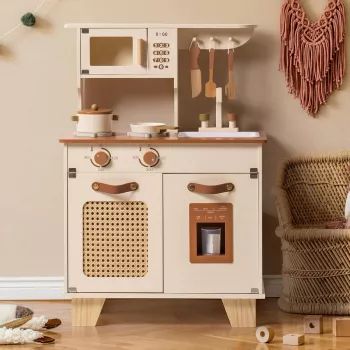
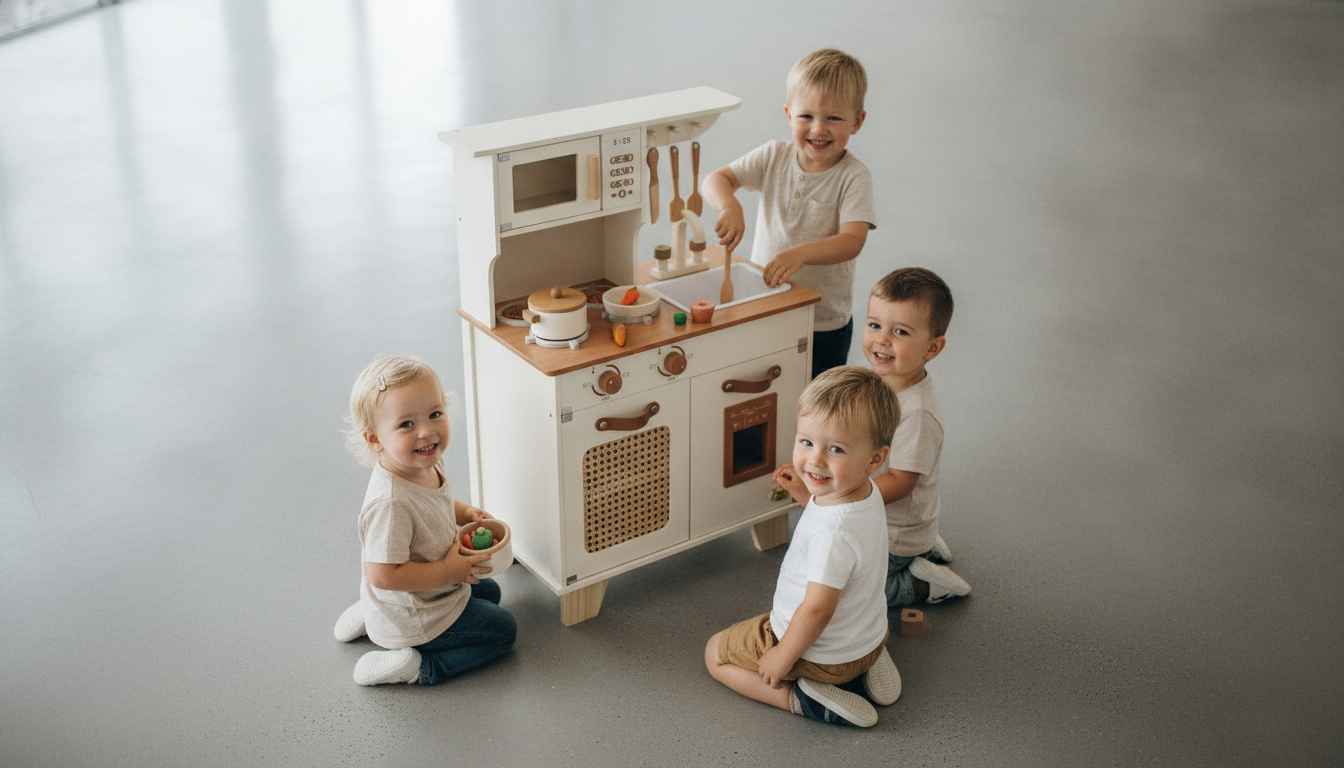
Wooden Kids Play Kitchen with Ice Maker & Accessories: A Realistic Pretend-Cooking Setup for Little Chefs
A well-designed play kitchen turns everyday routines—making “ice,” washing dishes, prepping meals—into imaginative play that builds language, cooperation, and confidence. This wooden kitchen set adds an ice maker feature and accessories to make role-play feel more like the real thing, whether children are running a home kitchen, a café, or a pretend cooking show.
What Makes This Play Kitchen Feel Real
When pretend play looks and feels like the spaces kids see every day, it becomes easier for them to invent stories, share roles, and stay engaged longer. A wooden play kitchen with an ice maker and accessories stands out because it brings “real kitchen” cues into kid-sized play.
- Wooden construction creates a sturdy, furniture-like feel that looks at home in playrooms and shared family spaces.
- Ice maker detail encourages “drink station” role-play—serving guests, taking orders, and practicing polite social scripts.
- Accessories included support open-ended play, so kids can switch between cooking, cleaning, and hosting without needing extra add-ons right away.
- Pretend kitchen routines naturally teach sequencing: gather tools → prep → cook → serve → clean up.
Play Ideas That Keep Kids Coming Back
Kids return to a pretend kitchen when it keeps offering “new jobs” to do. Rotating roles and adding simple story prompts can make the same set feel fresh day after day.
- Family dinner night: one child cooks, another sets the table, and a third runs the “ice maker” beverage counter.
- Restaurant role-play: make a menu on paper, take orders, call out tickets, and serve “specials.”
- Cooking show: children narrate steps out loud, practicing vocabulary such as pour, stir, slice, rinse, freeze, and serve.
- Grocery day: pair the kitchen with play food or pantry boxes; sort items by type and “stock the fridge.”
- Clean-up crew: include pretend dishwashing and wiping down counters to normalize tidying as part of the routine.
For families who enjoy pretend “episodes,” a simple audio recorder can make the cooking show feel official—kids can record a “welcome to my kitchen” intro or take pretend orders like a drive-thru. If that sounds fun, consider adding a small accessory like the Mini 8GB Voice Recorder Digital Audio MP3 Player USB Pen with Earphones for supervised use during play.
Skills Children Practice During Pretend Cooking
Pretend cooking is more than playtime—it’s a low-pressure way to rehearse real-world skills. The American Academy of Pediatrics highlights play as essential for healthy development, supporting learning, resilience, and relationships (AAP: The Power of Play).
- Language development: naming tools, ingredients, and actions; using turn-taking phrases like “your order” and “thank you.”
- Social-emotional learning: sharing space, negotiating roles, and managing small conflicts during cooperative play.
- Fine-motor coordination: grasping accessories, turning knobs, opening doors, and arranging items neatly.
- Early math concepts: counting “ice cubes,” sorting foods, comparing sizes, and timing pretend steps.
- Executive function: planning, remembering multi-step sequences, and switching tasks when the “customer” changes an order.
Feature Checklist for Parents and Gift-Givers
A great play kitchen should be engaging for kids and practical for adults. The checklist below helps you evaluate what matters most before gifting or setting up a new pretend-cooking station.
Quick checklist for choosing a wooden play kitchen
| What to check | Why it matters | Simple at-home test |
|---|---|---|
| Stability | Reduces tipping risk during energetic play | Gently rock it side-to-side; it should feel solid |
| Edge smoothness | Helps prevent scrapes and snags | Run a hand along corners and openings |
| Door/knob movement | Adds realism and keeps kids engaged | Open/close repeatedly; it should move smoothly |
| Accessory storage | Easier clean-up and fewer missing pieces | Confirm there’s a spot for the main items |
| Wipe-clean surfaces | Helps with spills and sticky hands | Use a damp cloth on a hidden area to confirm easy cleaning |
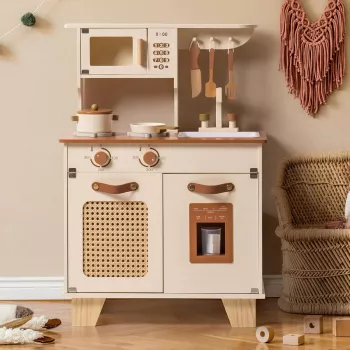
For a ready-to-gift setup that includes the ice maker detail and accessories, see the Wooden Kids Play Kitchen with Ice Maker & Accessories – Pretend Cooking Toy for Children.
Safety and Setup Notes
Safe play starts with solid assembly, age-appropriate accessories, and a few simple house rules. For broad toy safety guidance, the U.S. Consumer Product Safety Commission offers helpful parent resources (CPSC Toy Safety).
Care, Cleaning, and Keeping Accessories Organized
If you like printable routines for keeping play areas tidy, a simple daily mindset or “action checklist” can help parents stay consistent with quick resets—consider Speak Success: Your Power Words Action Checklist | Powerful Words for Success Daily Mindset Tool | Digital Download as a lightweight companion for organizing habits around the home.
A Gift That Works for Many Ages and Occasions
Compare related options such as Wooden Kids Play Kitchen with Ice Maker & Accessories – Pretend Cooking Toy for Children, and Personalized Letter Necklace to match features, dimensions, and use case before choosing.
FAQ
What age is a wooden play kitchen with accessories best for?
Most wooden play kitchens work well for toddlers through early elementary ages, with closer supervision for younger children who may mouth small pieces. As kids get older, play tends to shift from simple “cook and serve” to more complex restaurant stories with rules, menus, and turn-taking.
How do the ice maker features usually work in a pretend kitchen?
In most pretend kitchens, the ice maker is an interactive detail that mimics dispensing—either by releasing play “ice” pieces or by letting kids press a lever/button for the action. If the set includes small ice pieces, store them in a dedicated container and use them only when younger children are supervised.
How can accessories be kept from getting lost?
Use one clearly labeled bin for all kitchen tools and make it part of the end-of-play routine to return items before moving on. A quick weekly “inventory check” helps you spot missing pieces early, and rotating a few items in and out can reduce clutter while keeping play interesting.



Leave a comment