Choosing the Best Play Kitchen for Kids: What Matters
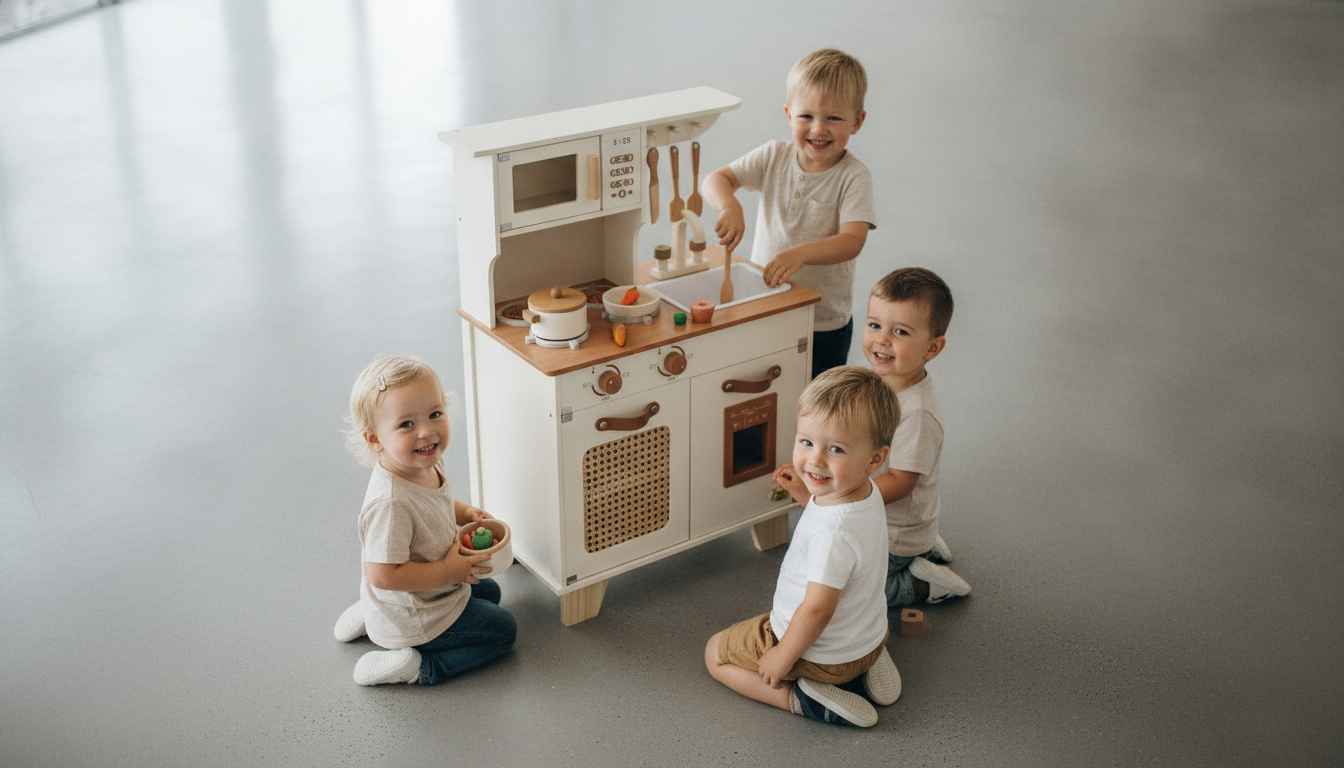
What is the best play kitchen for kids?
The best play kitchen for kids is the one that matches your child’s age, fits your space, and holds up to daily pretend-play. For most families, a wooden play kitchen with sturdy construction, realistic features (like turning knobs and a sink), and a few well-chosen accessories offers the best mix of longevity, safety, and fun. If your child loves “real life” details, models with an ice maker or pretend dispenser can add a lot of repeat play value without needing extra toys.
What to look for in a “best” play kitchen
Durable materials: Solid wood or quality engineered wood tends to feel sturdier than thin plastic and can better withstand years of opening doors and sliding parts.
Stable, kid-friendly design: Look for a wide base, smooth edges, and secure hardware. Doors and drawers should open easily without pinching little fingers.
Interactive features that get used: Turning knobs, clickable buttons, a faucet, and opening oven/fridge doors are the features kids return to. Extras like an ice maker can be a hit if the mechanism is simple and not flimsy.
Right size for your child: Toddlers do best with simpler layouts and larger pieces. Preschoolers and early elementary kids often enjoy more “stations” (stove, oven, fridge) and storage for play food.
Accessories matter more than you’d expect
A play kitchen becomes “the best” when it supports lots of different stories—cooking breakfast, running a restaurant, hosting friends. A small set of cookware, play food, cups, and utensils usually goes farther than a kitchen loaded with gimmicks. Storage hooks or bins are a bonus because kids can reset the space and start a new game quickly.
Need inspiration on features like ice makers and add-ons?
For a deeper look at wooden play kitchens—plus guidance on ice maker features and practical accessories—see this detailed guide: https://emperalle.com/guide-wooden-play-kitchen-ice-maker-accessories-for-kids/.
FAQ
What accessories should you buy for a kids’ play kitchen?
Start with a small cookware set, a mix of play food (produce plus “meals”), and kid-safe utensils. Add a few storage pieces—like baskets or hooks—so cleanup stays easy and the kitchen gets played with more often.


Leave a comment