Cleaning Motivation Made Easy: Start Small, Stay Consistent
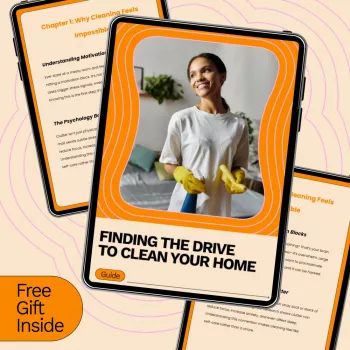
Finding the Drive to Clean Your Home: The Ultimate Guide to Motivation for Cleaning Your House
A clean home rarely happens because motivation magically appears—it’s usually the result of small choices that reduce friction, make progress visible, and reward consistency. Use this guide to reset expectations, build momentum in minutes, and turn cleaning into a routine that fits real life (even on low-energy days).
Why motivation disappears (and why that’s normal)
Motivation isn’t a dependable switch. Energy, mood, and stress levels shift day to day, and cleaning is often the first thing to fall off when life gets busy. Stress can also affect focus and follow-through, making “simple” tasks feel heavier than they look on paper (see the American Psychological Association’s overview of stress effects on the body: https://www.apa.org/topics/stress/body).
Cleaning also feels endless when the goal is vague. “Clean the house” has no finish line, while “clear the coffee table” does. Without a plan, decision fatigue kicks in: where to start, which tools to use, and how long to go becomes its own barrier. Add perfectionism—waiting for a full free day—and it’s easy to do nothing. Consistency beats intensity: short sessions repeated often outperform occasional marathon cleans.
Set a goal that can be started in under two minutes
Trade a big goal for a starter action. Instead of “clean the kitchen,” choose something that takes under two minutes: put dishes in the sink, wipe one counter for 60 seconds, or start the dishwasher. Then add a fixed time box—5, 10, or 15 minutes—so the task feels contained and less draining.
Start with a visible “win zone” that changes how your home feels fast: the entryway, kitchen counters, or the floor in one room. When the timer ends, stop on purpose and set up the next obvious step—leave the cloth out, keep the spray visible, or place a trash bag where you’ll grab it next time. The goal is to make the next session easier to start than the last.
Quick-start cleaning plans by energy level
| Energy level | Time | Best starting task | Stop point |
|---|---|---|---|
| Low | 2–5 minutes | Trash sweep in one room + return 5 items to homes | When the timer ends—leave a clear surface as proof |
| Medium | 10 minutes | Dishes + wipe one counter + tidy floors in one zone | One “before/after” photo or one fully reset surface |
| High | 20–30 minutes | One-room reset: laundry gather, declutter, wipe, vacuum/sweep | Room is “guest-ready enough,” not perfect |
Make cleaning easier than avoiding it
The fastest way to find more motivation is to lower the friction. Store supplies where the mess happens: bathroom wipes under the sink, microfiber cloths in the kitchen, and a small trash bin where clutter collects. If you have multiple floors or zones, consider keeping one all-purpose spray and one cloth in each main area so you’re not “starting” with a scavenger hunt.
A simple “launch pad” basket helps, too. Toss items that belong elsewhere into the basket, then empty it daily or every other day. This reduces the number of trips you take mid-clean and keeps clutter from migrating. For everyday clutter like mail, cups, and clothes, try the one-touch rule: handle an item once—put it away, file it, wash it, or trash it.
Use momentum tactics that work on tired days
When energy is low, rely on tools that create momentum quickly. Pair cleaning with something enjoyable—a favorite podcast, audiobook, or upbeat playlist—so the task feels less like a grind. If it helps to have “company,” try body-doubling: clean while on a call with a friend, or while someone else is doing a task nearby.
If audio is your go-to motivation boost, a dedicated device can make it easier to press play without getting distracted by notifications. Consider the Bluetooth MP3 MP4 Player with 4.0″ Touchscreen for playlists and podcasts, or the Mini 8GB Voice Recorder Digital Audio MP3 Player USB Pen with Earphones to capture quick reminders like “next obvious step” notes for tomorrow.
Turn cleaning into a routine that runs on autopilot
For days when you want a clear structure without overthinking, a guided resource can act like a reset button. Finding the Drive to Clean Your Home: The Ultimate Guide to Motivation for Cleaning Your House is designed around quick starts, realistic routines, and repeatable systems—especially helpful when planning feels harder than cleaning.
Break the all-or-nothing cycle: motivation after a messy week
When cleaning feels emotionally heavy
If motivation collapses for long periods, consider additional support alongside practical routines: a trusted friend, a professional organizer, or a mental health professional. For background on stress and how it can affect daily life, the NHS has a helpful overview here: https://www.nhs.uk/mental-health/conditions/stress-anxiety-depression/. And for evidence-based guidance on cleaning and disinfecting for hygiene, the CDC provides clear recommendations: https://www.cdc.gov/hygiene/cleaning/.
FAQ
How do you get motivated to clean when you’re overwhelmed?
Set a 5–10 minute timer, start with trash and dishes, and pick one visible surface to clear or wipe. Stop when the timer ends so your brain learns cleaning is safe, finite, and repeatable.
What should be cleaned first when the house is a mess?
Start with high-impact basics: remove trash, reset the sink/dishes, and clear floors or walkways. Then tidy one comfort zone (like the couch or bed area) to make the home feel livable fast.
How can cleaning become a habit instead of a big event?
Attach tiny tasks to routines you already do, keep a minimum baseline for bad days, and rotate a weekly focus area. Store supplies near where messes happen so starting takes seconds, not minutes.




Leave a comment