Pet Cord Safety: Stop Chewing & Tangles at Home
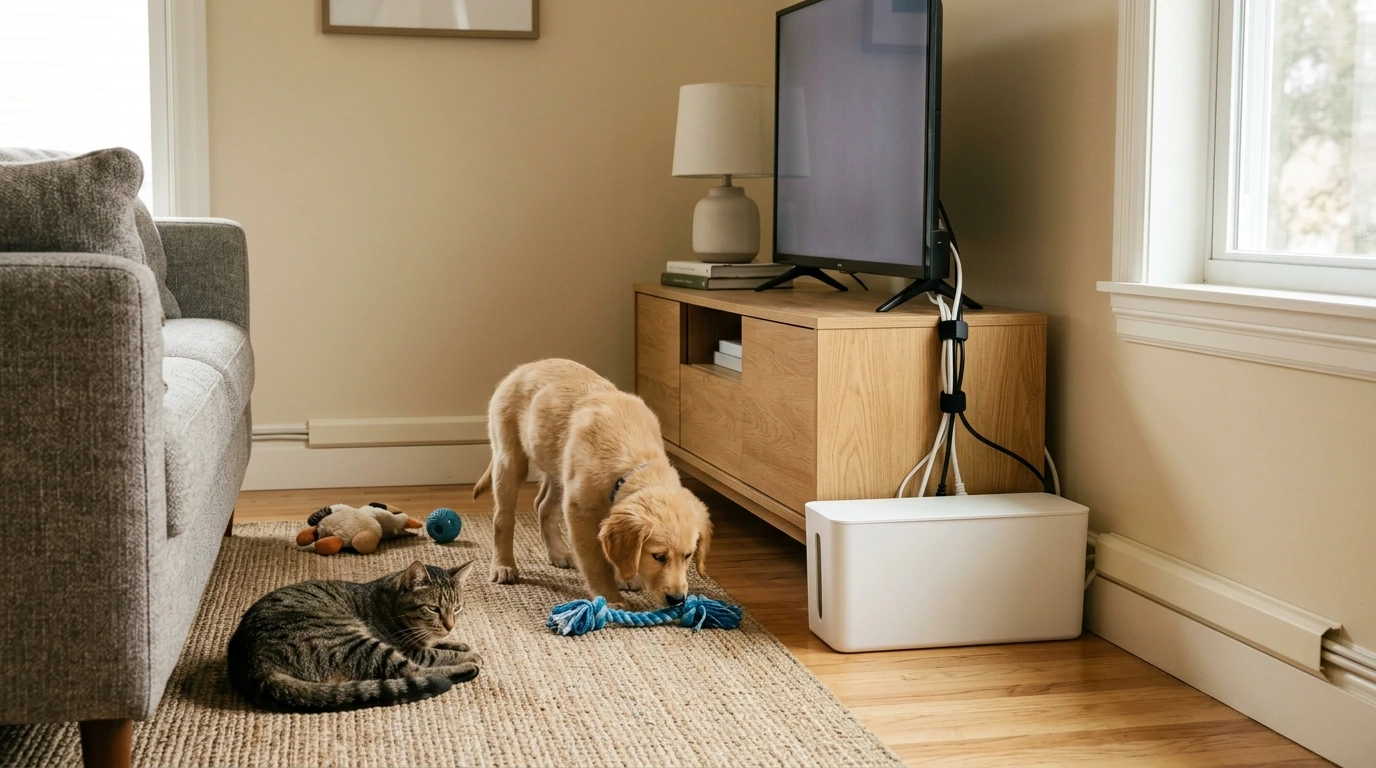
No More Chews: Cord Safety for Pets (Digital Home Guide for Dogs & Cats)
Loose cords and dangling cables can attract curious dogs and cats—especially teething puppies, playful kittens, or pets that seek stimulation when bored. A safer setup doesn’t have to mean a home full of tape and clutter; it’s usually a mix of smarter routing, better containment, and a few behavior basics that reduce the urge to chew or pounce. Below is a practical, room-by-room approach to lowering chewing and entanglement risks while keeping everyday devices easy to use.
Why cord safety matters for dogs and cats
Cord hazards aren’t just an “annoying chew” problem—they can become urgent medical or home safety issues. The most common risks fall into four categories:
- Chewing risks: Electrical shock, oral burns, and damage to teeth and gums from biting live or frayed cords.
- Entanglement risks: Collars, paws, or tails can catch on cords near desks, lamps, blinds, and charging stations.
- Fire and property risks: Damaged insulation can spark, overheat, or short—especially around bedding, rugs, and hidden power strips.
- Behavioral side: Chewing may be driven by teething, anxiety, boredom, prey/chase instincts (moving cords), or leftover food scents on cables.
For pet health concerns (including household hazards and toxins), keep reputable resources handy like AVMA pet safety tips and ASPCA Animal Poison Control.
High-risk zones to check first
If time is limited, start with the rooms where cords tend to be dense and pets tend to roam unsupervised.
- Living room: Lamp cords, TV and sound system cables, game console wiring, and cords routed behind sofas where pets nap.
- Home office: Laptop chargers, standing desk cables, under-desk power strips, and headphone cords left within reach.
- Bedroom: Phone chargers near nightstands, heated blanket cords, and bedside lamps—often accessible during quiet nighttime hours.
- Kitchen and laundry: Appliance cords (air fryer, toaster, mixer), vacuum cords, and areas where pets may sneak behind cabinets.
- Windows and blinds: Dangling blind cords and drawstrings; keep them tied up and out of reach.
Pet-proof cord setup: a practical checklist
A reliable cord-safety plan is mostly “reduce access and reduce motion.” Use this checklist to tighten up your setup without making daily charging a chore.
- Start by unplugging and inspecting: Replace any cord that is cracked, frayed, warm to the touch, or intermittently disconnecting.
- Route cords high and tight: Run cables along baseboards, behind furniture, or inside raceways; avoid hanging loops that sway.
- Bundle and shorten slack: Use cable ties/Velcro straps to reduce “toy-like” movement and eliminate dangling ends.
- Shield and contain: Cover cords with protective sleeves, split loom tubing, or rigid channels where chewing is likely.
- Elevate power strips: Mount them to a wall/desk underside when possible, keeping outlets and plugs out of reach.
- Block access: Use furniture placement, cord boxes, baby gates, or playpens to keep pets away from cable-dense corners.
- Remove temptation: Keep chargers in drawers, store headphones/controllers, and avoid leaving single cords trailing across open floors.
Quick-reference: common hazards and safer swaps
| Hazard | Why pets target it | Safer setup |
|---|---|---|
| Dangling phone charger by the bed | Moves easily and is within reach during quiet hours | Charge on a high shelf; use a shorter cable; keep slack inside a nightstand drawer |
| Loose power strip on the floor | Multiple cords create a “nest” to paw and chew | Mount the strip under a desk/behind furniture; use a cord box and a cable raceway |
| Thin laptop/USB cables near a workstation | Texture feels chewable; often smells like hands/food | Use braided sleeves or loom tubing; route behind a monitor stand; remove unused cables |
| Lamp cord behind a couch | Pets hide and play in the gap; cord is hard to spot | Run cord along the wall in a channel; reposition lamp; block the gap with furniture guards |
| Blind cords/drawstrings at windows | Dangling strings invite batting and chewing | Use cord cleats or wind-ups; keep cords tied high; consider cordless blinds |
Reducing chewing with enrichment and training basics
If you use deterrents or calming products, double-check ingredient safety—especially with sweeteners. For example, the FDA notes that xylitol can be dangerous for dogs, so keep human items like gum, mints, and certain “sugar-free” products well out of reach.
Recommended tools and digital help (available now)
- No More Chews: Cord Safety for Pets | Pet-Proof Your Home Guide for Dogs & Cats | Digital Download ($5.99) for room-by-room steps, checklists, and a simple prioritization plan.
- Bluetooth MP3 MP4 Player with 4.0″ Touchscreen ($34.67) for more portable listening that can reduce the need for long headphone runs across desks or couches.
- Mini 8GB Voice Recorder Digital Audio MP3 Player USB Pen with Earphones ($9.82) as a compact option to keep certain audio tasks off a cable-heavy workstation.
What’s inside the digital download
If a cord is chewed: immediate steps
FAQ
Are cord covers safe for pets that chew?
Cord covers help reduce access and add a protective layer, but they aren’t truly chew-proof for determined chewers. Combine covers with tighter routing, barriers (like gates or furniture blocking), and enrichment, and replace any damaged cord right away.
What should be done if a dog or cat chews a plugged-in cord?
Don’t touch the cord until power is off—unplug it or shut off the breaker first. Watch for signs like drooling, mouth redness, pawing at the face, or distress, and contact a veterinarian promptly if shock or burns are possible; then replace the cord and change the setup that allowed access.
How can cords be managed in a small apartment with limited furniture placement options?
Use adhesive raceways along baseboards, mount power strips under desks, and keep plugs contained in cord boxes to reduce floor-level access. Shorter cables, bundled slack, and a cable-free pet zone created with a gate or playpen can also make a small space safer fast.







Leave a comment