7-Drawer Fabric Dresser for Small-Space Storage
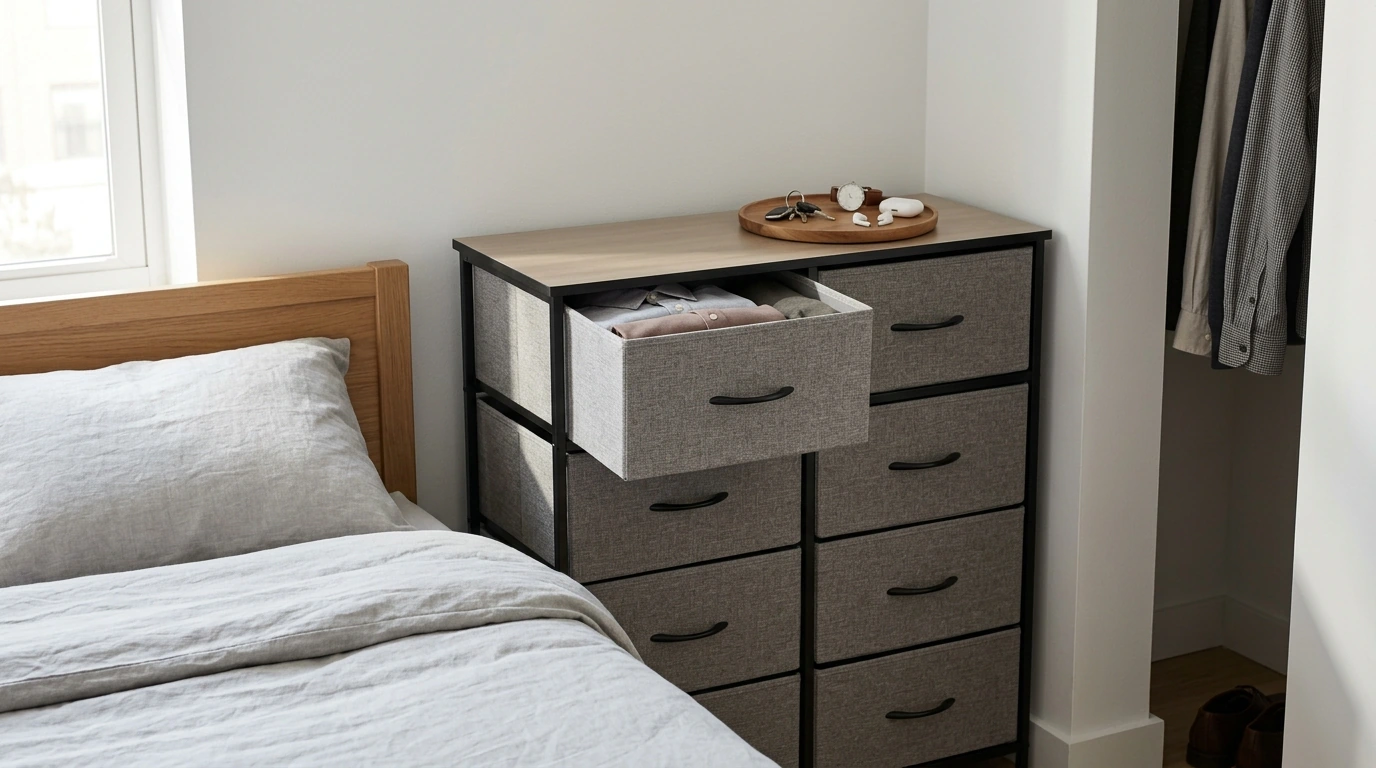
7-Drawer Fabric Storage Organizer Dresser for Bedroom and Living Room
A fabric storage dresser adds drawer space without the bulk (or price tag) of traditional wood furniture. A 7-drawer organizer is especially useful when you want everyday items sorted, visual clutter reduced, and a setup that fits comfortably in bedrooms, living rooms, and smaller layouts. With the right drawer “plan,” it becomes a simple system: each category gets a home, and surfaces stay clearer.
If you’re ready to add flexible storage, see the 7-Drawer Fabric Storage Organizer Dresser for Bedroom and Living Room and set it up as a stand-alone dresser or a smart add-on near closets and shelving.
What this 7-drawer organizer is best for
- Adds quick, lightweight drawer storage for folded clothing, accessories, linens, and daily essentials.
- Works well in apartments, dorms, nurseries, closets, and multipurpose rooms where flexible storage matters.
- Helps create simple “zones” (sleepwear, socks, charging cords, remotes, craft supplies) to prevent pile-ups.
- A good option when a low-profile dresser is preferred over deep, heavy furniture.
The biggest advantage of a 7-drawer layout is how easily it supports “one category per drawer.” Instead of cramming mixed items into a couple of deep drawers, you can separate frequently used essentials into smaller, easy-to-manage groups—often the difference between “mostly tidy” and “always chaotic.”
Room-by-room placement ideas
- Bedroom: dedicate drawers by category (tops, sleepwear, socks/underwear, accessories) to speed up mornings.
- Living room: store throws, board games, tech accessories, and kids’ items while keeping surfaces clear.
- Entryway: use drawers for hats, gloves, reusable bags, pet leashes, and small seasonal items.
- Closet: add “hidden” drawer storage below hanging clothes for folded items and overflow.
- Nursery/kids’ room: separate diapers/wipes, bibs, small outfits, toys, and art supplies.
Simple drawer plan ideas by room
| Room | Top drawers | Middle drawers | Bottom drawers |
|---|---|---|---|
| Bedroom | Everyday accessories (socks, underwear, jewelry) | Folded tees, pajamas, workout gear | Sweaters, jeans, spare linens |
| Living room | Remotes, chargers, controllers | Games, books, craft items | Blankets, pillows, seasonal décor |
| Entryway | Keys, sunglasses, small items | Gloves, hats, masks | Bags, pet supplies, umbrellas |
For tech-heavy households, one top drawer can become a dedicated charging-and-cables zone. Small items like earbuds, adapters, and a compact device can stay together—especially handy for travel days. For example, a drawer can hold a Bluetooth MP3 MP4 Player with 4.0″ Touchscreen alongside chargers and headphones, while another can store a Mini 8GB Voice Recorder Digital Audio MP3 Player USB Pen with Earphones with spare batteries and notebooks.
How to set it up for stability and daily convenience
- Place on a flat, hard surface when possible; if used on carpet, ensure the frame sits level before loading drawers.
- Keep frequently used items in upper drawers to reduce bending and to encourage consistent put-away habits.
- Distribute weight: avoid overloading a single drawer while leaving others empty.
- If placed near kids or in high-traffic areas, consider positioning it against a wall and keeping heavier items lower.
For day-to-day flow, treat the top surface as a “landing strip” rather than a storage pile. A small tray can corral keys, a watch, and lip balm, while the drawers handle everything else. If tip-over risk is a concern, follow established furniture safety guidance and keep heavier items low; the U.S. Consumer Product Safety Commission has practical recommendations for reducing tip-over incidents here: CPSC Furniture Tip-Over Prevention.
What to look for in a fabric drawer dresser
- Drawer count and layout: more drawers improves sorting; fewer categories usually means more clutter returns.
- Frame feel: a stable frame reduces wobble when opening drawers quickly.
- Drawer usability: handles (or pull tabs) should be easy to grip; drawers should slide without snagging.
- Top surface use: plan whether the top will hold a lamp, décor, or a catch-all tray.
- Cleaning needs: fabric drawers typically spot-clean easily; a lint roller helps with dust and pet hair.
If the organizer will live in a shared area—like the living room—consider assigning a drawer to each person. That single tweak keeps “miscellaneous” from spreading across tables and countertops. In a child’s room, a couple of drawers can be set aside for tomorrow’s outfit or school essentials to make mornings smoother; clothing like the Stylish Boys’ Corduroy Hooded Pullover with Pocket stays folded, visible, and easy to grab.
Care and maintenance tips
- Use drawer liners or small bins to prevent tiny items from migrating to corners.
- Rotate seasonal items (scarves, extra blankets) to free up prime drawer space.
- Vacuum around and under the dresser periodically to reduce dust buildup, especially in bedrooms.
- Wipe the top surface regularly; keep liquids in a tray to reduce the chance of spills.
Most day-to-day mess is solved with quick, light maintenance: a wipe-down for the top and handles, and an occasional vacuum pass along the baseboards. For general cleaning best practices—especially if the organizer is used in shared family spaces—this guide is a helpful reference: CDC — Cleaning and Disinfecting (general guidance).
A practical pick for flexible storage
FAQ
What can be stored in a fabric drawer dresser?
Folded clothing, socks/underwear, accessories, small linens, kids’ items, light crafts, cables/remotes, and other non-fragile essentials work well. Avoid very heavy items or anything wet that could damage the fabric.
Is a fabric storage dresser sturdy enough for everyday use?
It can be for daily organization when weight is distributed across drawers and heavier items are placed lower. Keeping the unit on a level surface also helps it feel more stable in regular use.
How do you keep a lightweight dresser from tipping or wobbling?
Load heavier items in the bottom drawers, keep the frame level, avoid pulling multiple drawers out at once, and place it against a wall. When children are present, follow general furniture tip-over prevention practices for added safety.




Leave a comment