Modern Minimalist Wooden Dining Table: Sizing, Style, Care
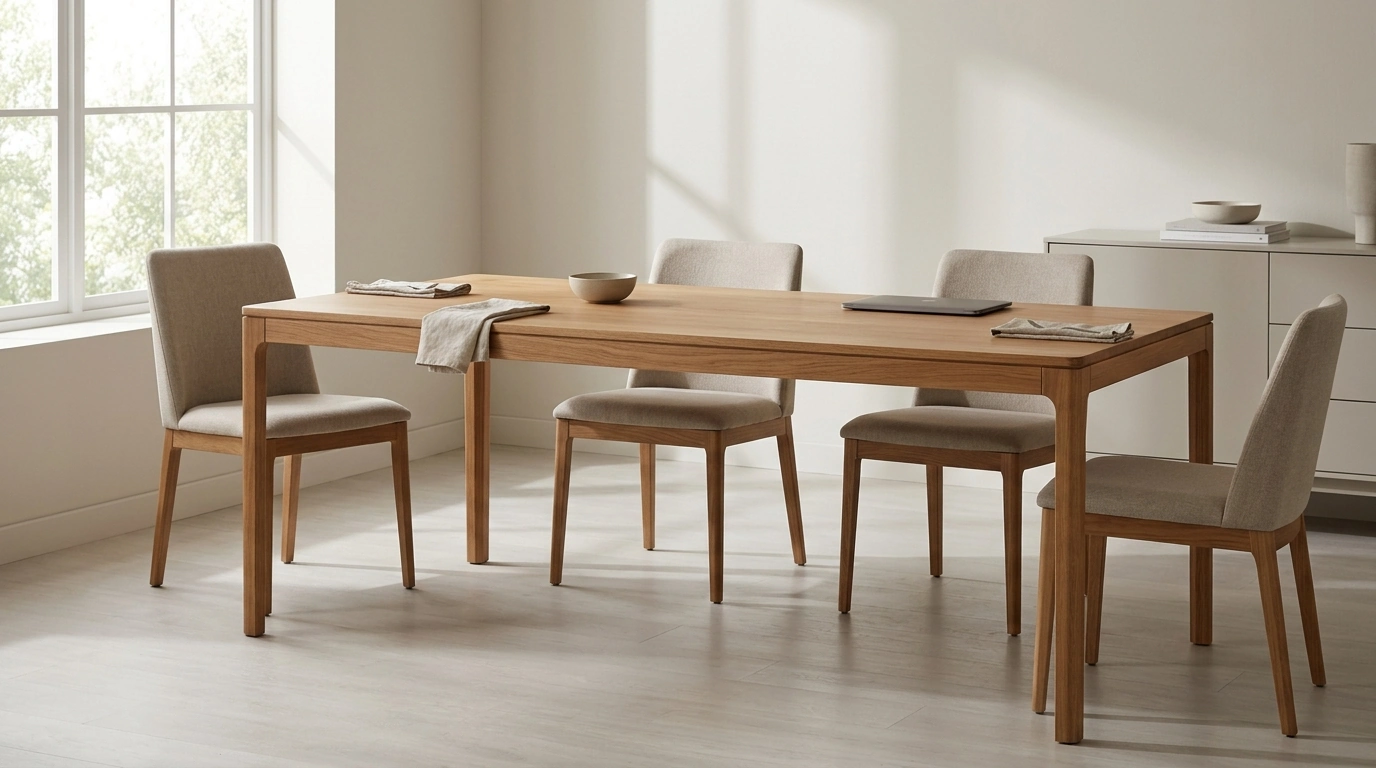
Modern Minimalist Wooden Dining Table: Clean Lines, Warm Wood, Everyday Function
A modern minimalist wooden dining table brings calm to the room: simple geometry, honest materials, and a surface that holds up to daily meals, work sessions, and gatherings. The best designs feel quietly intentional—nothing fussy, nothing bulky—just a comfortable place to live life. Below is what to look for, how to style it so it stays warm (not stark), and how to keep wood looking beautiful for years.
What makes a dining table feel modern and minimalist
Minimalist doesn’t mean empty; it means edited. The most convincing modern tables pair clean lines with wood’s natural character.
- Simple silhouette with balanced proportions—skip heavy ornamentation and extra visual “noise,” such as chunky aprons or overly complex bases.
- Warmth from natural wood tones paired with crisp edges or gently softened corners that feel approachable in everyday use.
- Leg design that reads light and architectural (straight, tapered, or panel legs) while staying stable and wobble-free.
- A natural-looking, easy-care finish that won’t punish you for using the table daily.
- Room to move: enough clearance for chairs and circulation so the table supports the room rather than dominates it.
Sizing: choosing the right fit for the room and the household
Before falling for a shape or wood tone, start with measurements. A minimalist table looks best when it has breathing room and your chairs can move easily.
- Measure the dining zone first, and aim for comfortable walkways around the table whenever possible.
- Seat planning: give each person enough width so elbows and place settings don’t collide, especially for everyday family meals.
- Chair clearance: confirm chairs can slide in and out without bumping walls, radiators, or a sideboard.
- Tabletop depth matters for place settings and centerpieces—deeper tops feel more generous and less cramped.
- If the area doubles as a workspace, prioritize a stable base and a smooth surface that handles laptops, writing, and video calls.
Quick sizing guide for a minimalist dining setup
| Household use | Typical seating | Suggested tabletop length | Notes |
|---|---|---|---|
| Daily meals in a compact space | 2–4 | 48–60 in (122–152 cm) | Keeps the room open; choose slimmer legs for visual lightness |
| Everyday family dining | 4–6 | 60–72 in (152–183 cm) | Works well with standard chairs and a modest centerpiece |
| Frequent hosting | 6–8 | 72–96 in (183–244 cm) | Consider an extendable option or generous end clearance |
| Work + dining hybrid | 4–6 | 60–80 in (152–203 cm) | Look for durable finish and minimal seams for a smooth writing surface |
Material and construction details that matter
With minimalist furniture, construction does a lot of the talking. Small details—edge shape, joinery, and finish—make the difference between “gallery clean” and “flimsy.”
- Solid wood vs. veneer: solid wood offers longevity and can often be refinished; quality veneer can look gorgeous and remain more stable when built well.
- Core stability: engineered cores (paired with skilled craftsmanship) can help reduce seasonal movement—an important consideration in climates with big humidity swings. For a deeper technical reference on wood movement and properties, see the USDA Forest Service Wood Handbook.
- Joinery and support: sturdy leg-to-top connections and reinforcement under larger tops help prevent sagging and wobble over time.
- Edge profile: square edges look crisp; slightly eased edges feel friendlier and resist chipping in high-traffic households.
- Finish type: matte or satin finishes typically suit minimalist rooms and hide minor fingerprints better than high-gloss.
If sustainability is a priority, look for responsible sourcing signals such as FSC certification, which indicates wood from more responsibly managed forests.
Styling a minimalist wooden dining table without making it feel cold
Minimalist rooms can still feel inviting. The trick is layering tactile materials and warm light while keeping surfaces visually calm.
For airier comfort in a dining/work zone, maintaining healthy indoor conditions helps both people and materials—especially in tighter apartments. The EPA’s indoor air quality guidance is a helpful reference for humidity and ventilation basics.
Care and maintenance for long-lasting beauty
A streamlined option to consider
If the goal is a calm, modern anchor that works for both weeknight dinners and weekend hosting, the Modern Minimalist Wooden Dining Table offers a clean-lined focal point designed to blend easily with contemporary interiors. Pair it with simple upholstered chairs or classic wood chairs for a cohesive, easygoing dining area, and keep the centerpiece minimal so the grain stays in the spotlight.
To support a dining/work hybrid setup, consider a small tech companion for background music during prep or a focused playlist during work sessions, like the Bluetooth MP3 MP4 Player with 4.0″ Touchscreen. For quick meeting notes at the table without pulling out a full laptop, the Mini 8GB Voice Recorder Digital Audio MP3 Player USB Pen with Earphones can be a compact, stash-in-a-drawer option.
FAQ
How many people can a minimalist dining table seat comfortably?
Plan roughly 24 inches of width per person for comfortable elbows and place settings, then confirm leg placement doesn’t steal knee space. As a rule of thumb, 60–72 inches often suits 4–6 people, while 72–96 inches is more comfortable for 6–8, depending on chair size and whether you need space for serving dishes.
Is solid wood better than veneer for a dining table?
Solid wood is prized for longevity and the ability to refinish, but it can move more with seasonal humidity changes. Quality veneer over a stable core can be a smart choice for consistency and cost—look for well-made construction, clean edging, and sturdy joinery.
How do wood dining tables handle heat, water, and daily wear?
Most issues come from prolonged exposure rather than quick contact, so coasters and trivets make a big difference. Wipe spills promptly and favor matte or satin finishes, which tend to hide minor marks and fingerprints better than high-gloss surfaces.





Leave a comment