Roth vs. Traditional IRA: Quick Checklist for Beginners

Roth IRA vs. Traditional IRA: A Simple Checklist to Choose the Right Account
Choosing between a Roth IRA and a Traditional IRA usually comes down to one core issue: pay taxes now or pay taxes later. After that, eligibility rules, deduction limits, and flexibility details help narrow the best fit. Use the checklist-style approach below to make a clear decision, then revisit it each year as income, tax brackets, and benefits change.
Start With the One Decision That Drives Most Outcomes: Taxes Now or Later
A Roth IRA and a Traditional IRA are both designed for retirement savings, but they flip the tax timing.
- Roth IRA: contributions are typically made with after-tax dollars. If withdrawals are qualified, retirement withdrawals are generally tax-free.
- Traditional IRA: contributions may be tax-deductible (depending on income and workplace plan coverage). Withdrawals are generally taxed as ordinary income.
A practical shortcut is to compare expected tax rates:
- If the tax rate is expected to be higher later, Roth often looks better.
- If the tax rate is expected to be lower later, Traditional often looks better.
If the future tax picture feels cloudy (which is common), splitting contributions between Roth and Traditional (when eligible) can diversify how future withdrawals are taxed.
Eligibility and Contribution Basics to Check Before Deciding
Before getting attached to either option, confirm a few basics that can limit (or expand) what’s possible.
- Earned income is required to contribute to either IRA type.
- Roth IRA eligibility phases out at higher incomes based on filing status, and eligibility can change year to year.
- Traditional IRA contributions are generally allowed regardless of income, but the deduction can be limited if you (or a spouse) are covered by a workplace retirement plan and income is above certain thresholds.
- Annual contribution limits apply across IRAs combined (Roth + Traditional). Catch-up contributions may apply at certain ages.
- Spousal IRAs may allow contributions for a non-working spouse if the couple files jointly and meets other requirements.
Rules and thresholds change, so it’s smart to confirm the current year’s numbers directly with the IRS and other official resources.
Quick Comparison Table: Roth vs. Traditional at a Glance
This side-by-side view highlights the decision points that tend to matter most for beginners. Always confirm current-year limits before funding an account.
| Feature | Roth IRA | Traditional IRA |
|---|---|---|
| Tax treatment of contributions | After-tax (no deduction in most cases) | May be tax-deductible (subject to rules) |
| Tax treatment of retirement withdrawals | Generally tax-free if qualified | Generally taxed as ordinary income |
| Income limits | Contribution eligibility phases out at higher incomes | No income limit to contribute, but deduction may phase out |
| Access before retirement | Contributions (not earnings) can often be withdrawn more flexibly; rules apply | Early withdrawals may be taxed and penalized; exceptions exist |
| Required minimum distributions (RMDs) | Typically no RMDs for the original owner | RMDs typically apply starting at the required age |
| Best fit (common scenario) | Lower tax rate now, higher later; desire for tax-free retirement income | Higher tax rate now, lower later; value of a current-year deduction |
The Beginner-Friendly Checklist (Answer in Order)
Answer these in order; each step tends to eliminate confusion and keep the decision grounded in real constraints.
- Is a current-year tax deduction a top priority? If yes, lean Traditional (if deductible). If no, Roth stays in the lead.
- Is a workplace retirement plan available (401(k), 403(b))? If yes, check whether the Traditional IRA deduction is limited by income. If limited, Roth may be more attractive (if eligible).
- Is income close to Roth contribution limits? If yes, verify eligibility early and re-check if income changes (bonuses, job change, spouse’s income, side work).
- Is there a goal to reduce future taxable income in retirement? Roth contributions can create tax-free income later (subject to rules).
- Is there a chance of needing access to contributions before retirement? Roth contributions can be more flexible than Traditional contributions, but exceptions and holding-period rules matter.
- Is minimizing required distributions later important? Roth IRAs typically avoid RMDs for the original owner; Traditional typically does not.
- Still unsure? Consider splitting contributions between Roth and Traditional (if eligible) to hedge tax uncertainty.
Common Scenarios and Which Option Often Fits
Mistakes to Avoid Before Opening or Funding an IRA
Printable Tool: Turn the Checklist Into a 10-Minute Decision
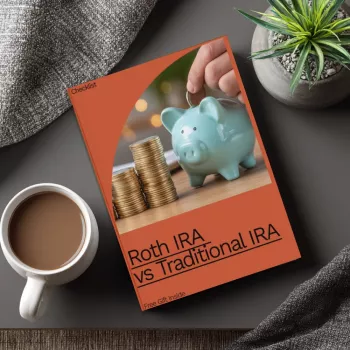
- Roth IRA vs Traditional IRA Checklist (printable) for a simple, beginner-friendly decision flow you can reuse each year.
- Mini 8GB Voice Recorder Digital Audio MP3 Player USB Pen with Earphones to capture quick notes after a meeting with an accountant or when comparing account options.
- Speak Success: Your Power Words Action Checklist as a lightweight habit tool to stay consistent with saving and follow-through.
Helpful Official References (Confirm Current-Year Rules)
- IRS Publication 590-A (Contributions to Individual Retirement Arrangements)
- IRS Publication 590-B (Distributions from Individual Retirement Arrangements)
- Consumer Financial Protection Bureau (CFPB) — Retirement resources
FAQ
Can both a Roth IRA and a Traditional IRA be funded in the same year?
Yes, if eligible, both can be funded in the same year, but the total combined contributions across IRAs must stay within the annual limit (including any catch-up amount if applicable).
What happens if income ends up too high for a Roth IRA contribution?
If final modified adjusted gross income makes you ineligible, the contribution generally needs to be corrected under IRS rules (such as recharacterizing or otherwise adjusting it). Handling corrections properly can be time-sensitive, so professional help is often worth considering.
Is a Traditional IRA always better if it provides a tax deduction?
Not always. A deduction can be valuable today, but future tax rates, required distributions, and retirement income goals can change the outcome; in many cases, mixing account types improves tax flexibility later.






Leave a comment