Baby Reflux Tracker Checklist: Feeding, Sleep, Comfort
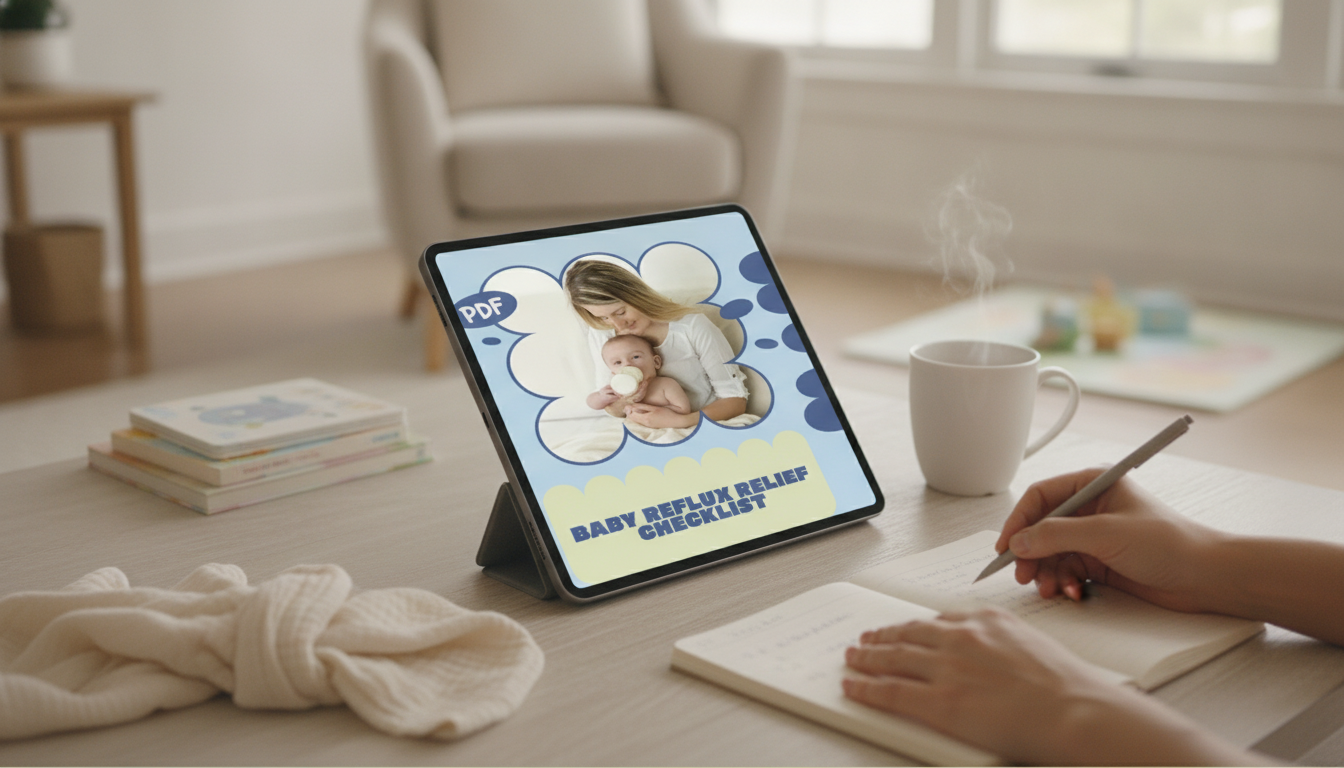
Baby Reflux Relief Checklist: A Simple Way to Track Symptoms, Feeding, Sleep, and Comfort
Spit-up and fussiness can be normal in early infancy, but patterns matter—especially when feeding and sleep start to feel unpredictable. A simple checklist helps new parents notice what’s happening, when it happens, and what seems to help, so day-to-day care is calmer and conversations with a pediatrician are clearer.
Reflux in babies: what’s common and what needs attention
Reflux is the backflow of stomach contents into the esophagus. Many babies spit up because the muscle at the top of the stomach is still maturing, and because babies spend a lot of time lying down and feeding frequently. In many cases, it’s messy but not dangerous.
What often matters more than the size of the spit-up is how your baby seems to feel and how reflux affects daily life. A baby who spits up but eats well, gains weight, and settles easily may simply be going through a typical phase. On the other hand, frequent distress, feeding struggles, or poor growth deserves closer attention.
Symptoms can also overlap with other issues like overfeeding, a bottle nipple flow that’s too fast, swallowed air, milk protein intolerance, or illness. Tracking “what happened right before” and “what helped afterward” can make the picture clearer for you and your child’s clinician. For more background, see MedlinePlus: Gastroesophageal Reflux in Infants or Mayo Clinic: Infant acid reflux.
Quick symptom scan: what to note today
When the day feels like a blur of feeding, burping, and naps, a short “scan” can help you capture the most useful details without over-documenting.
- Spit-up vs. vomiting: note whether it’s effortless dribble or forceful/projectile, and how often it happens.
- Feeding behaviors: pulling off the bottle/breast, arching back, coughing/choking, gulping, refusing feeds, or needing frequent breaks.
- Comfort cues: crying during or after feeds, irritability when lying flat, frequent hiccups, grimacing, or seeming uncomfortable after burps.
- Sleep patterns: short naps, waking soon after being laid down, needing upright time to settle, or frequent nighttime discomfort.
- Diaper and growth clues: fewer wet diapers, poor weight gain, or blood/mucus in stool should be treated as higher concern.
Daily reflux pattern tracker (example)
| Time | Feed type & amount | Position after feed | Symptoms noticed | What helped |
|---|---|---|---|---|
| 7:00 AM | Bottle 3 oz | Upright 20 min | Spit-up, fussing | Burp breaks, slower pace |
| 10:30 AM | Breast 12 min | Upright 15 min | Hiccups, arching | Side-lying break, burped twice |
| 1:00 PM | Bottle 2.5 oz | Upright 25 min | No spit-up | Kept pace steady |
Feeding support checklist: small changes that often help
For many babies, the goal isn’t “no spit-up,” but easier feeds and a more comfortable tummy. Small adjustments—tested one at a time—can make it obvious what helps.
- Pace feeds: pause every few minutes, let swallowing slow, and watch for stress cues like wide eyes, gulping, milk leaking, or coughing.
- Burp strategy: try burping mid-feed and at the end. Some babies do best with quick, frequent burps rather than one long attempt.
- Bottle flow and latch: make sure the nipple flow isn’t too fast; for breastfeeding, aim for a deep latch and discuss strong letdown management if needed.
- Volume and timing: if your clinician agrees, consider smaller, more frequent feeds; avoid pushing “just a little more” when baby is showing stop cues.
- After-feeding routine: keep baby upright for a consistent window and log what duration seems to reduce discomfort.
Sleep and comfort checklist: settling without extra strain
- Safe sleep first: place baby on their back on a firm, flat sleep surface with no loose bedding; avoid unapproved sleep positioners. The American Academy of Pediatrics guidance is a helpful reference: AAP Safe Sleep Recommendations.
- Soothing sequence: use a predictable order such as diaper check → gentle burp → upright cuddle → calm swaddle (if age-appropriate and safe) → lay down drowsy.
- Timing: note whether discomfort peaks 20–60 minutes after feeds and whether a brief upright period changes wake-ups.
- Comfort tools: white noise, gentle rocking, and low lighting can reduce overstimulation that can amplify fussiness.
- Track what backfires: bouncing, vigorous play after feeds, or a quick lay-down can increase spit-up for some babies—patterns differ, so logs help.
Red flags: when to contact a pediatrician promptly
Using a digital checklist to make patterns obvious
Baby Reflux Relief Checklist: a ready-to-use tracking tool
If you want a lightweight way to track symptoms without building your own system, the Baby Reflux Relief Checklist – Easy Digital Checklist for New Parents is designed to keep feeding, sleep, and comfort notes in one place. It’s especially helpful for spotting trends by time of day, position after feeds, pacing changes, and soothing routines.
For parents who prefer to capture quick details hands-free (like timestamps, feeding notes, or questions to ask later), a simple audio note can also help between feeds. The Mini 8GB Voice Recorder Digital Audio MP3 Player USB Pen with Earphones is a compact option for recording brief observations you can transfer into your checklist when things are calmer.
FAQ
How can a parent tell the difference between normal spit-up and reflux that needs medical attention?
Many babies spit up, so the key differences are how your baby feels and functions: feeding difficulty, worsening irritability, poor weight gain, dehydration signs, breathing issues, or forceful/bilious vomiting are reasons to contact a pediatrician promptly.
How long should a baby stay upright after feeding to reduce spit-up?
A common range is about 15–30 minutes, but it varies by baby. Track what duration seems to reduce discomfort while still following safe sleep guidance (back on a firm, flat surface for sleep).
Are inclined sleepers or positioners safe for reflux?
Unapproved sleep positioners and inclined sleepers are not recommended for sleep. Hold baby upright only while awake and supervised, and use a firm, flat sleep surface for naps and nighttime.






Leave a comment