Mind-Sharpening Hobbies: Build Focus and Clarity in 4 Weeks
What “mind-sharpening” hobbies actually train
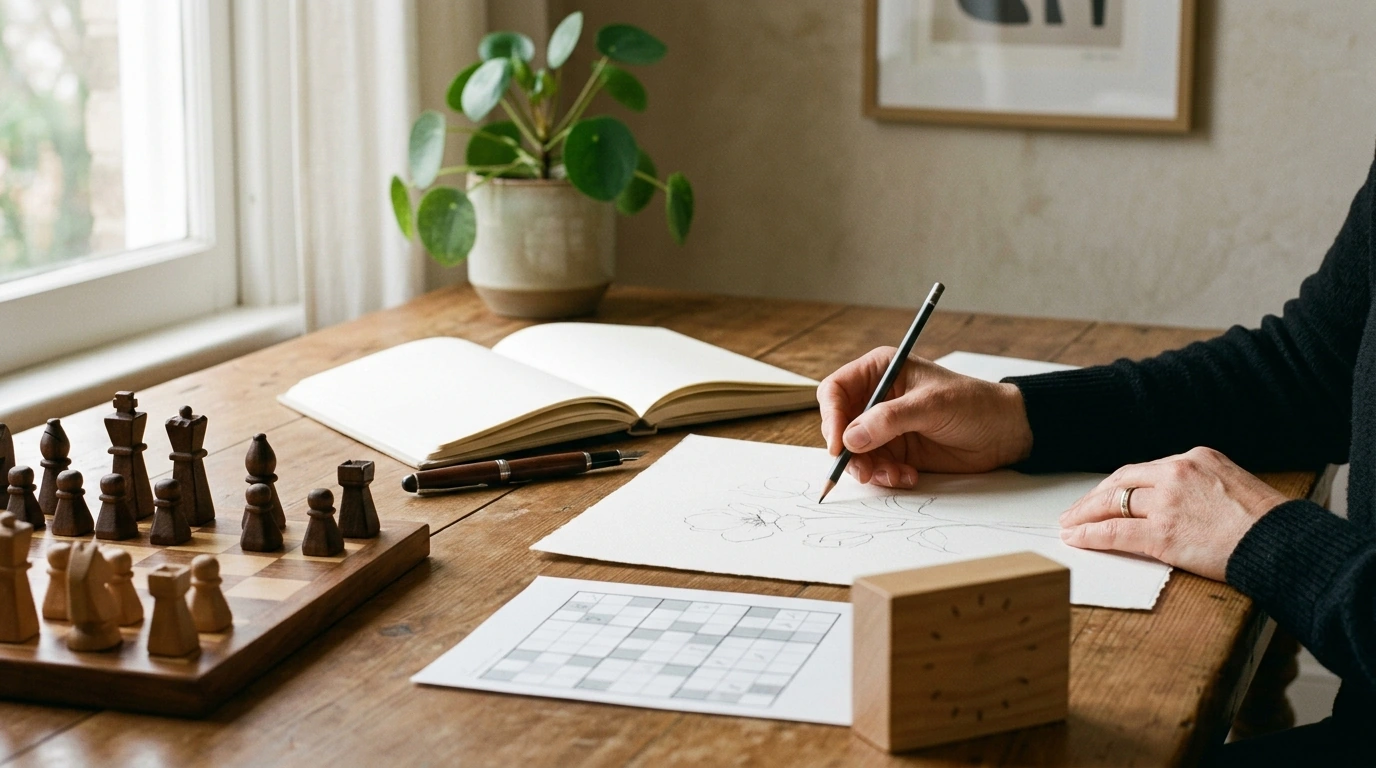
A hobby that truly sharpens your mind does more than “keep you busy.” It gives your brain small, repeatable challenges that strengthen attention and make thinking feel clearer under real-life pressure. The most useful hobbies tend to train a blend of these skills:
- Sustained attention: staying with one task long enough to spot mistakes and course-correct.
- Working memory: holding multiple steps or ideas in mind while acting (like remembering the next two moves while calculating the current one).
- Cognitive flexibility: switching approaches when the first attempt fails, without spiraling into frustration.
- Processing speed with accuracy: getting faster while keeping quality high (especially useful for studying and work tasks).
- Creative fluency: generating lots of ideas, then refining the best ones instead of fixating too early.
One practical way to avoid burnout: pick hobbies that train different “modes.” Pair a calm, deep-focus practice with a more playful creative practice, and you’ll usually get better consistency over time. Research also shows that task-switching comes with a real cost to attention—so hobbies that encourage single-tasking can help rebuild that mental “stickiness.” For more background, see the American Psychological Association’s overview of switching costs: https://www.apa.org/research/action/multitask.
A quick match-up: hobbies and the mental skills they strengthen
If you want a simple plan, choose:
- One “deep focus” hobby (quiet, structured, attention-building).
- One “creative flow” hobby (enjoyable, expressive, easier to sustain).
- 3–5 sessions per week is enough—even if sessions are short.
- Track one metric at first (minutes practiced, pages read, puzzles solved, sketches completed).
| Hobby | Best for | Typical session | Low-friction way to start |
|---|---|---|---|
| Journaling (structured prompts) | Mental clarity, emotional regulation, idea organization | 10–20 min | Use one prompt: “What matters today?” |
| Chess, Go, or logic puzzles | Planning, working memory, resisting distractions | 15–45 min | Solve 3 puzzles/day instead of full games |
| Drawing or sketching | Observation, creative confidence, patience | 15–30 min | Sketch one everyday object from life |
| Learning a musical instrument | Sustained attention, coordination, auditory memory | 20–40 min | Practice one scale + one short piece |
| Meditation or breath training | Attention control, mental quiet, stress recovery | 5–15 min | Use a timer and count breaths to 10 |
| Language learning | Memory, pattern recognition, verbal flexibility | 10–25 min | Shadow 2 minutes of audio daily |
| Coding (small projects) | Problem-solving, precision, creative building | 30–60 min | Automate one tiny task or make a mini game |
| Handcrafts (knitting, origami, woodworking) | Fine motor focus, persistence, flow | 20–60 min | Follow one beginner pattern step-by-step |
Deep-focus hobbies for mental clarity
These options are especially effective when your goal is cleaner thinking, less mental noise, and better follow-through.
Meditation and breath training
Treat attention like a muscle. Start with 5 minutes, count breaths up to 10, and restart at 1 whenever you drift. Mindfulness practices may also help reduce stress and anxiety, which can free up mental bandwidth; see Harvard Health Publishing for an accessible overview: https://www.health.harvard.edu/mind-and-mood/mindfulness-meditation-may-ease-anxiety-and-mental-stress.
Logic puzzles (sudoku, nonograms, crosswords)
Puzzles reward steady concentration and error-checking. A useful twist: set a “no-guessing” rule for a few minutes—only fill what you can justify—so your brain practices patience instead of impulsivity.
Chess/Go tactics training
Instead of long games, do short puzzle sets. This tight format improves calculation and reduces sloppy “autopilot” moves because you’re constantly checking variations and consequences.
Reading with active recall
Read a few pages, then pause to write a one-sentence summary from memory. This small habit strengthens comprehension and working memory without turning reading into a chore.
Handwriting notes (even for digital content)
Creative hobbies that improve focus by making it enjoyable
Sketching from observation
Music practice (precision mode + flow mode)
Creative writing with constraints
Photography walks with a theme
DIY crafts
Learning-focused hobbies that compound over time
Language learning (spaced repetition + output)
Coding with tiny, finishable projects
Memory training for everyday life
Public speaking or debate practice
Science or history micro-courses
Short lessons paired with quick self-quizzes build durable knowledge and mental endurance. For a broader look at cognitive health across adulthood, the National Institute on Aging is a helpful reference: https://www.nia.nih.gov/health/cognitive-health-and-older-adults.
A simple 4-week routine for stronger focus (without burnout)
Tools that can make practice easier (optional)
- A ready-to-use guide: If you want structured exercises and ideas you can pick up anytime, consider Hobbies That Sharpen Your Mind: A Comprehensive Guide to Hobbies That Improve Focus for Mental Clarity and Creativity.
- Audio-based practice: For language shadowing, timed meditation, and music drills on the go, a dedicated device like the Bluetooth MP3 MP4 Player with 4.0″ Touchscreen can keep practice separate from phone distractions.
- Fast capture for ideas: For journaling, voice reflections, or quick self-reviews after practice, the Mini 8GB Voice Recorder Digital Audio MP3 Player USB Pen with Earphones makes it easy to record thoughts before they evaporate.
FAQ
How long does it take for a hobby to noticeably improve focus?
Give it 2–4 weeks of consistent practice on most days, starting with short sessions. Track one simple metric (like minutes practiced) so progress is obvious even when it feels subtle.
Which hobby is best for mental clarity when stress is high?
Breath training, meditation, gentle journaling, and low-stakes crafts tend to help because they lower arousal while still training attention. Choose something that feels calming enough to repeat daily.
Can creative hobbies help concentration even if they feel “unproductive”?
Yes—creative flow lowers friction, which makes it easier to sustain attention. Use a clear constraint (time limit, theme, or small goal) so the mind has a boundary and doesn’t drift.



Leave a comment