Practice Public Speaking with AI: A 20-Minute Loop
AI-Assisted Public Speaking Practice for Confident Communication
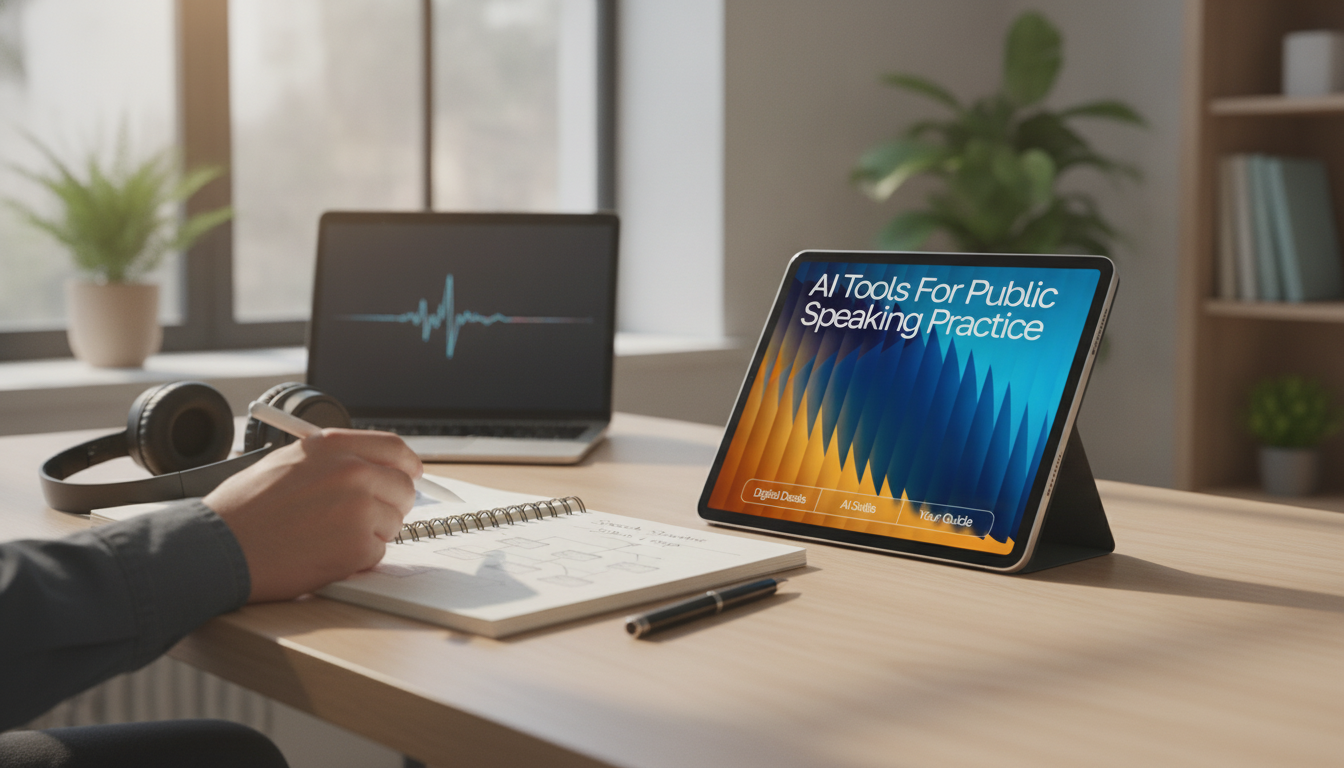
Practice gets easier to repeat when the feedback is fast, concrete, and consistent. That’s where AI can help: it can tighten your message, offer alternate wording when a line feels clunky, and help you plan a rehearsal routine you can actually stick to—without waiting for a coach, a class, or a willing audience.
The goal isn’t to sound robotic. The goal is to create a simple loop: draft, rehearse, review, refine—so your final delivery feels like a clear conversation with purpose.
What AI can improve during speech practice
- Clarity and structure: strengthen the opening, simplify transitions, and keep ideas in a logical flow.
- Audience fit: adjust tone, examples, and formality for a meeting, interview, class presentation, or keynote.
- Timing and pacing: estimate length, find sections that run long, and set targets for each part.
- Language polish: reduce filler phrases on the page, trim jargon, and sharpen calls to action.
- Rehearsal efficiency: generate practice scenarios like Q&A rounds, objections, and alternate versions.
For community practice and real-world repetition, organizations like Toastmasters International can be a helpful complement to solo rehearsal—especially once your draft is stable and you’re ready to test it with live listeners.
A repeatable 20-minute practice loop (draft → rehearse → refine)
This routine is short on purpose. It’s easier to practice five times a week for 20 minutes than to “cram” for two hours on Sunday.
- Minute 1–5: paste your outline and request a stronger hook plus a clearer thesis in one sentence.
- Minute 6–10: ask for a tighter version that keeps meaning but removes redundancy.
- Minute 11–15: rehearse out loud and record audio; notice where breath, pacing, or wording feels awkward.
- Minute 16–18: request alternate phrasing for the 2–3 spots where you stumbled or sped up.
- Minute 19–20: do one clean “one-take” run and compare time and smoothness to your last take.
If stress spikes as presentation day approaches, a quick reset routine (breathing, posture check, and a short walk) can reduce the urge to avoid practice. The American Psychological Association’s stress resources include practical ideas for managing pressure so rehearsal stays productive.
AI prompts that produce useful rehearsal feedback
Good feedback is specific. Instead of “make it better,” ask for changes you can test immediately in a new run.
- “Rewrite this intro to sound confident and warm in under 40 seconds; keep the core message the same.”
- “Identify the single most important takeaway and recommend a closing sentence that reinforces it.”
- “Create three transition sentences between these sections, each with a different tone: direct, story-like, and persuasive.”
- “List likely audience questions and draft concise answers that stay on message.”
- “Highlight any sentences that are hard to say out loud; propose smoother alternatives.”
After you test a rewritten line aloud, keep the version that feels easiest to speak on one breath. That’s often the version that sounds clearest to listeners, too.
Tools to combine: text coaching, recording, and quick review
Practice toolkit options
| Practice need | Simple approach | AI-assisted approach | What to measure |
|---|---|---|---|
| Clearer message | Read the speech and mark confusing parts | Ask for a shorter version and a one-sentence takeaway | Fewer “um” moments, smoother transitions |
| Better pacing | Time the speech with a stopwatch | Ask for a timed outline and target seconds per section | Total time, time per section |
| Stronger Q&A | Have a friend ask questions | Generate tough questions and rehearse short answers | Answer length, clarity, calmness |
| Improved delivery | Record and self-review | Summarize weak spots and request alternatives for tongue-twisters | Stumbles, filler words, breath control |
For quick capture anywhere, a dedicated recorder can make practice feel effortless. The Mini 8GB Voice Recorder Digital Audio MP3 Player USB Pen with Earphones is an easy way to record short runs, replay them, and notice pacing drift before it becomes a habit.
If you want a more structured routine with ready-to-use exercises, AI Tools for Public Speaking Practice | Public Speaking Guide | Speech Practice eBook | Digital Download for Confident Communication can help you standardize your sessions so each rehearsal produces a measurable improvement.
Building confidence without sounding scripted
Clear speech also depends on vocal health and sustainable technique. If you notice persistent strain, hoarseness, or vocal fatigue, resources from the National Institute on Deafness and Other Communication Disorders (NIDCD) can help you understand what to watch for.
For a simple daily confidence cue, a short mindset checklist can reduce hesitation right before you speak. Speak Success: Your Power Words Action Checklist | Powerful Words for Success Daily Mindset Tool | Digital Download is designed for quick, repeatable routines that support steadier delivery.
A simple tracking sheet for measurable progress
Quick progress tracker (example)
| Session | Goal | Time | One improvement focus | Next action |
|---|---|---|---|---|
| 1 | Clear opening | 5:30 | Slow down the first minute | Rewrite hook + rehearse twice |
| 2 | Smoother transitions | 5:10 | Remove repeated points | Tighten section 2 + add transition |
| 3 | Confident close | 5:05 | Stronger call to action | Test two closing options |
Practice resources that speed up results
FAQ
How often should a speech be practiced to feel confident?
Daily short runs (10–20 minutes) or 3–5 focused sessions per week typically builds confidence faster than occasional long rehearsals. Repeat the first and last 30 seconds every session, and do one full run about 24 hours before presenting.
Can AI help reduce filler words and improve pacing?
Yes—record a run, review a transcript or notes for where fillers show up, then rewrite those lines into shorter, easier-to-say sentences. Planned pauses, clean transitions, and practicing within a steady words-per-minute range also help pacing feel controlled instead of rushed.
What should be prepared for audience questions?
Prepare likely questions and rehearse 15–30 second answers that stay on message, then practice bridging back to your main takeaway. For each key claim, have one supporting data point or example ready so answers sound calm and credible.





Leave a comment